PTMS: What You Need to Know About Next-Gen Payment Terminal Management Systems
Listen to this article
A payment terminal management system provides essential features for enhancing commerce experiences and improving operations. It enables remote key injection, monitoring, configuration, and updates. It also empowers retailers with predictive maintenance capabilities and device tracking. Advanced features help prolong terminal life, support a wider range of devices, and help mitigate fraud. Building a payment terminal management system into a retailer’s technology strategy can help improve operations today and lay the groundwork to support innovations in the future.

The statistics show that retailers need a payment terminal management system. Statista reports that merchants have deployed about 400,000 point of sale (POS) terminals in Portugal. It’s a good move for businesses that can accept digital payments in their shops, capturing more revenue by offering customers payment method choices. However, retailers, particularly those with chains or multiple locations, have a business problem to solve: How to manage all those payment devices to keep commerce operating at speed? The solution is a next-generation payment terminal management system.
What Is a Payment Terminal Management System?
A payment terminal management system is software that enables remote monitoring and management of the devices in a payment estate. The software gives the retailer visibility into how devices are performing, so they can take a proactive approach to device maintenance and maximize uptime. With a payment terminal management system, retailers can configure and update devices from a single screen. The system also removes the complexity of tracking device locations, the operating systems they’re running, and their usage.
Value-Added Features of a Payment Terminal Management System
Systems designed by payment technology companies with retail expertise solve several payment terminal management pain points. One is streamlining deployment. A leading payment terminal management system will support remote encryption key injection. The manufacturer can send terminals directly to the retailer. This eliminates the need to send them to a key injection facility at an extra cost and extra time before the retailer can begin accepting payments.
Retailers also benefit from a system that’s terminal-agnostic. Retailers expect their investments in payment terminals to deliver returns for 5-10 years. However, technology is advancing quickly, which could lead to some devices becoming obsolete. A payment terminal management system that isn’t specific to one platform or one terminal line allows retailers to use it with the devices already in the field. It also gives retailers more agility to plan technology upgrades with the assurance that the system can continue to manage last-gen devices until it makes sense to replace them, both operationally and budget-wise. Payment terminal management system providers can also add value by leveraging artificial intelligence (AI) to enable perform predictive maintenance, helping retailers avoid disruptions and extending device health.
|
Payment terminal management system feature |
Benefits to Retailers |
|---|---|
| Remote monitoring | Visibility into all payment devices from a central location |
| Remote key injection | Streamlined device deployment, lower costs |
| Remote management | Configuration and updates without on-site service |
| AI-driven predictive maintenance | More uptime, longer device life |
| Device tracking | Streamlined reporting and compliance |
| Terminal-agnostic management | Manage any terminal, including last-generation technology. |
The Advantages of Payment Terminal Management as a Part of a Total Solution
A payment terminal management system has obvious face value for retailers or payment service providers (PSP) managing payment estates. However, retailers who implement this technology strategically will receive even more of a return. Paired with next-generation Android payment terminals, retailers can accept the full range of payment methods and run business applications, like loyalty rewards programs or customer surveys, on the terminals, managed effectively with the payment terminal management system.
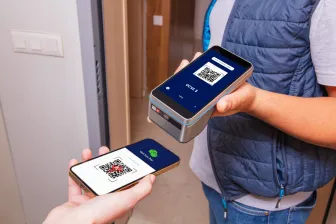
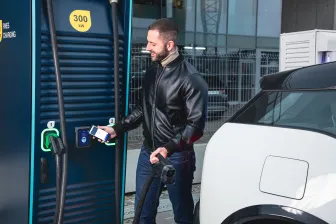
A payment terminal management system can also support retailers and other merchants as they expand into new revenue streams. One example is adding self-service with unattended payment solutions or enhancing parking areas with electric vehicle charging stations, which, under 2025-2026 regulations, require stations to accept bank card payments. With purpose-built payment terminals for unattended or other use cases and an effective management system, a business can offer customers the convenience of secure digital payments, wherever they interact.
In addition, a leading payment terminal management system can work in concert with intelligent fraud prevention technologies to alert merchants to suspicious behavior. Real-time information allows merchants to stop fraud rather than react after it has occurred. Although Banco De Portugal reports that electronic payment fraud is low in comparison to the European Economic Area (EEA), it showed a slight increase in 2024. Staying vigilant can help retailers keep losses from fraud at a minimum.
Implementing a Payment Terminal Management System to Prepare for What’s Coming
How consumers pay will continue to evolve, and future-looking retailers will ensure that the payment terminal management system they deploy today can adapt as technology advances in the future. One emerging trend is biometric payments. Cognitive Market Research predicts that the biometric payments market in Europe will grow at a 16.5% CAGR from USD 2,690.88 million in 2024 to USD 8,114.6 million by 2031. Ingenico is seeing early success with its palm vein biometric payment solution that allows consumers to pay by scanning the veins in their hands. Retailers should ensure that their terminal management systems support the devices and peripherals that support emerging payment innovations and those on the horizon.
Ingenico’s Goals for Next-Generation Payment Experiences
Regardless of where innovation will take the payments industry, Ingenico is committed to making transactions as easy and user-friendly for retailers and their customers. That includes developing solutions that unify processes at the checkout, such as automatically calculating rewards points or verifying age for restricted purchases.
Ingenico is also committed to making the operational side of accepting payments as easy as possible for retailers. Ingenico’s broadening portfolio gives retailers more tools to enhance commerce, backed by our team for support. We are also available to work with retailers, acquirers, and ISVs that provide solutions to them to choose the best technologies for their use cases.
What are you building to support your business and your future? Contact us to see how Ingenico solutions can add value.
FAQs
A payment‑terminal management platform turns a scattered, manually‑maintained fleet into a single, cloud‑controlled estate. By continuously monitoring health, delivering over‑the‑air updates, and providing instant remote assistance, it detects problems early, cuts repair time, and eliminates many causes of downtime, ultimately keeping merchants’ payment points up and running.
Remote Key Injection is Ingenico’s secure, over‑the‑air method for loading cryptographic keys (AES, DES, TDES, HMAC, etc.) into payment terminals from a central Key/Mass server. Instead of a technician physically inserting keys on‑site (Local Key Injection – LKI), the keys are delivered through an encrypted channel to the device, using hardware security modules (e.g., Thales PayShield 10K) and role‑based, dual‑control workflows.
The Payment Terminal Management System works with any supported Ingenico terminal, but for last‑generation devices that have been declared End‑of‑Life, the system’s advanced management features are no longer available, and migration is recommended.
By combining anti‑skimming technology, secure remote key management, and real‑time estate monitoring, Ingenico’s Payment Terminal Management System not only streamlines operations but also creates a robust, multi‑layered defense that significantly lowers the risk of payment fraud.
A PTMS (Payment Terminal Management System) gives retailers a single, cloud‑based control plane that speeds up device rollout – new locations or pop‑up concepts are live in days; delivers software‑defined functionality – services are added, updated or retired remotely; provides data‑driven visibility – real‑time metrics guide where and how to expand; offers API‑first integration – payments become a programmable building block for any new digital or physical service. Together, these capabilities let a retailer launch, test, and scale new services (self‑service kiosks, loyalty programs, AI‑driven checkout, omnichannel experiences, etc.) without the cost, time or risk of traditional hardware‑centric deployments.