Paytech 2026: How Innovation and Experience Are Shaping Payments
Ingenico’s Paytech 2026, held in Vienna, showcased how Ingenico is innovating to meet the evolving needs of merchants, from supporting global expansion and increasing consumer demand for payment choice to preparing for the integration of AI to enhance future customer journeys. Ingenico’s next-generation AXIUM devices, Ingenico 360 platform, and broader portfolio provide merchants with the tools to stay ahead in a rapidly changing payments landscape.
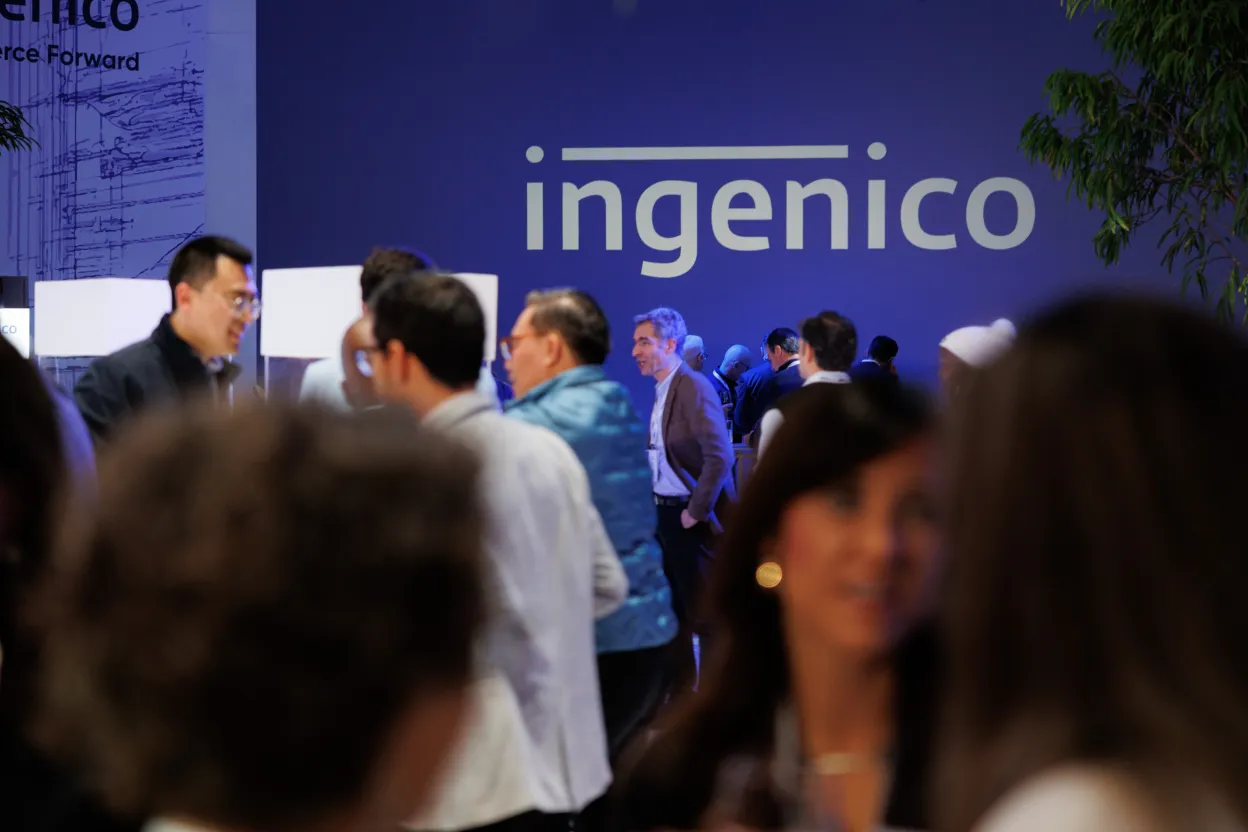
Paytech 2026 brought together customers, partners and industry leaders in Vienna to discuss one clear reality: payments are becoming more complex, and expectations continue to rise across every market.
Capabilities that once felt advanced are now table stakes. Payments must work seamlessly across channels, adapt to local requirements, remain secure, and operate reliably over time.
Across presentations and panels, three key themes emerged about the future of payments and how the industry can move forward with confidence.
Accepting Payments Anywhere in the World
Ingenico’s global customer base brings a diversity of perspectives shaped by local markets, regulations and consumer behaviors. A consistent theme throughout the event was the need for payment solutions that support local schemes and compliance requirements while enabling regional expansion.
At the same time, innovation must never come at the expense of stability and security. Merchants and consumers need to trust that payment technology will protect their data and operate reliably. Retailers, restaurateurs, and other merchants need payment technology that allows them to grow while remaining secure and compliant.
Keeping Up with Changing Consumer Behavior
Consumers continue to embrace new ways to pay, from digital wallets to alternative payment methods, and are increasingly open to emerging innovations like stablecoins. The Motley Fool reports 50% of U.S. consumers are open to paying with stablecoins, with 71% of Gen Z saying they would use them for everyday purchases. Consumers are also open to new payment methods. For example, ResearchAndMarkets.com predicts the global Buy Now, Pay Later (BNPL) market will grow to USD 911.8 billion by 2030. Digital wallets continue to dominate in the APAC region, with 65.12% market share in 2025, according to Mordor Intelligence.
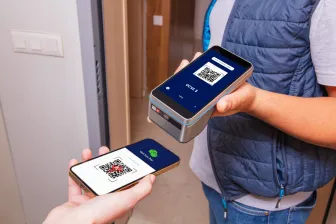
Android-based payment technology plays an important role here, giving developers flexibility to introduce new features securely and compliantly leveraging device features, such as cameras and QR code scanners to streamline experiences.
Preparing for the Rise of AI in Commerce
Agentic AI has captured the attention of consumers. PYMNTS reports nearly half of U.S. consumers are interested in agentic AI completing routine purchases and, under the right circumstances, larger “research-driven” purchases. Additionally, The Product Bridge reports that 71% of European consumers want AI integrated into shopping. To meet expectations for AI-enhanced commerce, payment technology must enable consumers to automate purchases when desired and enable agents to use the consumer’s preferred payment method accurately and securely.
Discussions at Paytech focused on practical applications, including predictive maintenance, fraud detection, and intelligent monitoring, all delivering measurable operational value through improved uptime and better decision-making.
Simplifying Payments through Platforms and Integration
The shift in expectations highlights why payment platforms and devices continue to evolve. The goal is not only to add capabilities but to simplify how payments are deployed, managed, and scaled over time.
This philosophy is reflected in the introduction of Ingenico’s next-gen AXIUM devices and Ingenico 360, a unified cloud platform that connects devices, services, and data. Together, they reduce operational complexity, improve visibility, and enable consistent management at scale.
As highlighted during the event, innovation must be holistic.
“Innovation cannot happen in silos. Ingenico has taken a holistic approach with AXIUM and Ingenico 360,” said Anushka Weeratunga, Managing Director, Ingenico Asia Pacific.
Floris de Kort, CEO, and Erik Vlugt, CPO, showcased and demonstrated Ingenico’s next-generation AXIUM terminals. These PCI 7, Android 14, field-upgradable devices are available starting with the AXIUM DX-8 this quarter, featuring dynamic LEDs, large displays, powerful cameras, and the capability to run robust business applications on payment devices.
Enabling Practical Innovation at Scale
The next-generation AXIUM family of devices and Ingenico 360 are modern and flexible, allowing partners to create industry- and country-specific solutions and add new technologies as they emerge. Ingenico partners can adapt the system to accept the full range of payment methods, including alternative payments and local payment schemes. Merchants can also run business applications on the payment terminals to create seamless transactions that identify customers quickly and automatically include loyalty rewards and promotions. AXIUM devices also give merchants the opportunity to enhance experiences with light cues and haptics. The Ingenico team also emphasized its transition from a payments hardware company to a more software-driven company, with the introduction of Ingenico SoftPOS and Ingenico 360.
A strong focus at Paytech was the developer journey. As ecosystems grow, building, testing, certifying, and deploying solutions must become simpler. Providing structured tools and consistent environments enables partners to innovate with confidence while reducing operational complexity.
Building the Future of Commerce Together
Throughout the event, one theme remained constant, innovation happens through collaboration. With a global team of more than 3,000 employees, Ingenico is focused on meeting today’s industry needs while continuing to innovate for the future and strengthen partnerships across the ecosystem.
José Luis Arias Muerza, Executive Vice President Europe, Middle East and Africa, captured this spirit, echoing de Kort in comparing Ingenico to “a lion that roars” as it continues to build its brand as a powerful industry leader.
Paytech provided an important forum to exchange ideas, challenge assumptions, and explore how the industry can continue to evolve together. “We’re looking forward to continuing the conversation,” he said.
The conversations don’t end here – they’re just beginning.
FAQs
Android‑powered payment technology is the backbone of a future‑ready checkout because it turns a traditional terminal into a flexible, updatable commerce hub. Ingenico’s AXIUM platform leverages Android to deliver a durable, high‑performance POS that can run a wide ecosystem of apps— from core payment processing to loyalty, digital receipts, and value‑added services— all while staying secure and PCI‑compliant through a modular, continuously‑updated OS. This open, developer‑friendly environment lets merchants integrate their own business applications via SDKs and APIs, roll out new features instantly, and adapt to emerging payment methods (e.g., QR‑code, BNPL, SoftPOS) without replacing hardware. The result is a consistent, scalable solution that reduces complexity, accelerates time‑to‑market, and ensures the checkout experience can evolve alongside consumer expectations and regulatory changes.
Ingenico 360 is a cloud‑native, API‑driven platform that unifies device, software, and service management into a single, end‑to‑end environment. It centralises onboarding, configuration, remote diagnostics, firmware and app updates, and merchant‑facing services (digital receipts, analytics, self‑service tools) across all Ingenico and Android‑based terminals. By providing real‑time device visibility, secure remote access, flexible merchant tagging, and modular service tiers, the solution eliminates fragmented legacy estates, cuts support costs, accelerates new‑service roll‑outs, and unlocks revenue‑generating add‑ons—all while maintaining PCI‑DSS compliance and a secure, scalable architecture.
The Ingenico Tap to Pay solution is compatible with any Android or Apple phone or tablet which runs OS Android 8.1 or above (and currently running OS Android 11 or above) or iPhone XS devices and above and iOS 16.4 version and above and has an NFC module.